


Soil Carbon Amendments use plant-based or treated animal materials to boost soil’s physical, chemical, and biological functions. This practice increases organic matter, stores carbon, improves aggregate stability, and enhances habitat for soil organisms.
Why use Soil Carbon Amendments?
Conservation Practice Standard Soil Carbon Amendments (Code 336) supports building soil organic matter, strengthening carbon stocks, improving aggregate stability, and enhancing habitat for soil organisms, with added benefits such as better soil moisture and higher productivity. Soil response varies by condition; degraded, sandy, or acidic soils often see the greatest gains. Biochar offers long-lasting carbon storage and improved soil structure, while compost provides short-term nutrients, long-lasting carbon, and microbial communities. Using both together can enhance nutrient retention, biological activity, and water-holding capacity more effectively than either alone.
Training
NRCS Practice Standard 336 Soil C Amendment: Building Soil C and Improving Soil Health with Biochar
Soil Carbon Amendment CPS 336 Training Resources
- Conservation Practice Standard - Soil Carbon Amendment
- Biochar as a Carbon Amendment (PowerPoint)
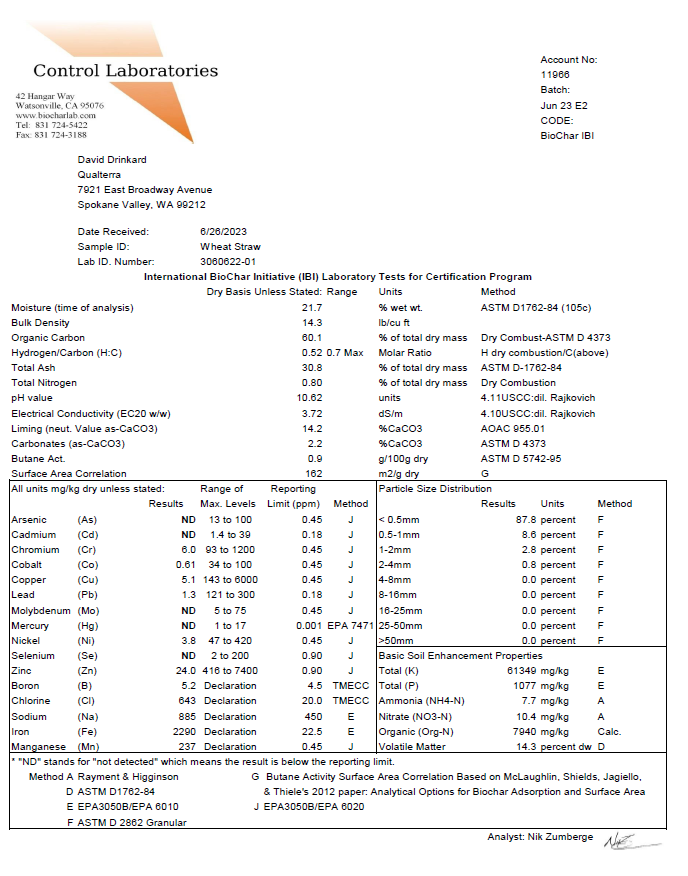
- Biochar Lab Report
- Conservation Practice Standard Code 336 (PowerPoint)
- Midwest Laboratories Compost Testing fact sheet
- Planning 336 Soil Carbon Amendment (PowerPoint)
- Training Notice – Planning CPS 336 Soil Carbon Amendment
- Soil Carbon Amendment Reports (PowerPoint)
- Planning Soil Carbon Amendment Implementation/Application (PowerPoint)
- Soil Carbon Amendment CPS 336 Instructional Guide and Lesson Plans
- Conservation Standard Practice – Soil Carbon Amendment (336) Training Agenda
Tools
Biochar Atlas
The Biochar Atlas provides consistent and efficient development of technical specifications for CPS 336 soil carbon amendment. Developed in cooperation with the USDA Agricultural Research Service (ARS).
Links to the Biochar Atlas suite of tools:
Biochar Atlas - Soils Data Explorer provides users in the pacific northwest information about the inherent properties of selected soils, and the attributes of various types of biochar.
Biochar Cost-Benefit Analysis Tool enables the user (with guidance tailored to the pacific northwest) to estimate the costs and financial benefits of utilizing biochar on their operation, by including estimated costs and allowing the user to personalize those costs (if known).
The US National Biochar Selection Tool offers users interested in biochar throughout the country an ability to enter in soil test data, identify commercially available biochar by priority, and determine application rates based off of plant needs.
Soil Carbon Amendment Calculator provides a way to see if the soil carbon amendment analysis meets the conservation practice requirements and converts units in analysis reports (e.g. parts per million to percent). If given amendment application amounts, the tool can calculate total application of analytes and fertilizer and lime offsets.